
Solid Brick or Brick Veneer and How to Tell Which One Your House Has
Two homes can look identical from the street and be built in completely different ways. One may have a wall made of solid, load-bearing brick several layers thick. The other may have a single layer of brick attached to a wood frame, acting as a decorative and protective skin. Knowing which one you own matters more than most homeowners realize, because the two behave differently, age differently, and need different repairs.
This guide explains the difference, how to tell them apart without tearing anything open, and why it affects maintenance decisions.
What Solid Brick Means
In a solid brick wall, also called double-wythe or multi-wythe brick, the bricks themselves carry the weight of the building. Two or more layers of brick are tied together, often with brick set sideways at regular intervals so the wall acts as a single mass. This was the standard way to build in Ontario well into the early twentieth century, and many homes in older Toronto neighbourhoods still use it.
Solid brick walls are thick, heavy, and absorb a lot of moisture. They tend to handle that moisture by drying slowly in both directions, through the outer face and the interior side.
What Brick Veneer Means
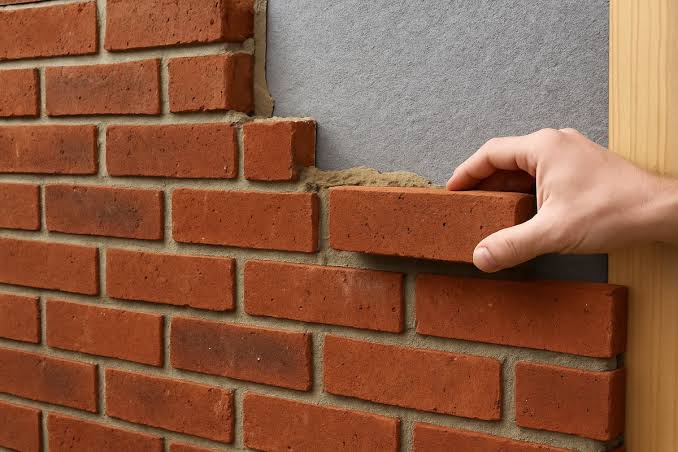
Brick veneer is a single layer of brick, about 90 mm thick, built in front of a structural wall of wood or steel framing. A small air space, usually around an inch, separates the brick from the wall behind it, and metal ties hold the two together. The brick does not carry the load of the house. Its job is to shed most rain and give a durable finish.
Veneer became the dominant approach for new homes from roughly the middle of the twentieth century. Nearly all brick houses built in the GTA suburbs since the 1960s are veneer.
Simple Ways to Tell Them Apart: Look at the Brick Pattern
Examine the bond, meaning how the bricks are laid. In a solid wall, you will often see a header course: a row where the short ends of the bricks face out, appearing every fifth to eighth row. These bricks tie the layers together. In a veneer wall, every brick shows its long face, a pattern called running bond. If you see short ends in the wall, that is a strong hint of solid brick. Be careful, though, as some veneer walls include fake or “snapped” headers purely for appearance.
Measure the Wall Thickness at a Window or Door
Look at the depth of a window or exterior door opening. A solid brick wall is typically 8 to 12 inches thick or more, which creates a deep window sill. A veneer wall with framing behind it is usually around 6 to 8 inches thick overall. A noticeably deep opening points to solid masonry.
Check the Age of the House
A home built before about 1940 in an older part of the city is very likely solid brick. Post-war homes are a mix, and anything built from the 1960s onward is almost always veneer.
Look for Weep Holes
Veneer walls normally have small openings, called weep holes, at the base of the brick, spaced about every 24 inches. They let water that gets behind the veneer drain out. Solid brick walls do not have them. If you see a row of tiny gaps in the mortar joints just above grade, you are probably looking at veneer.
Check the Basement or Attic
In an unfinished basement or accessible attic, you can often see the inner face of the wall. Bare brick on the inside points to solid construction. Wood framing, insulation, or sheathing indicates veneer.
Tap the Wall
Knocking on a solid brick wall produces a dull, dense sound. A veneer wall may sound slightly more hollow. This is not a reliable test on its own, but it can support the other clues.
Why the Difference Matters: Moisture Behaviour
Solid brick absorbs water and releases it slowly. This is normal for the material, and it is the reason breathable mortar and avoiding waterproof sealers are so important. Veneer is designed to drain, so blocked weep holes, missing flashing, or damaged mortar can trap water in the cavity and rot the framing behind it.
Types of Damage
Solid brick walls tend to show mortar erosion, spalling, and the effects of long-term freeze-thaw cycles. Veneer walls add the risk of loose or detached ties, cracking from framing movement, and hidden damage behind the brick if water has been getting in.
Repair Methods
The mortar used in repairs should be compatible with the original. Older solid brick often needs a softer, lime-rich mix so that movement and moisture are released through the joints. Veneer can generally take a modern mix, though colour and composition still need to match. A skilled mason will confirm the construction type before choosing materials. For homes needing either type of work, professional brick repair starts with identifying how the wall was built.
Cost and Scope
Solid brick repairs often involve more labour, since walls are thicker and heavier and original brick can be harder to match. Veneer repairs may involve inspecting and replacing wall ties, correcting flashing, or addressing the cavity behind the brick. Understanding the wall type helps make quotes easier to compare.
What Each Type Needs From You
- Solid brick: Keep mortar joints sound, use breathable products only, maintain gutters and grading, and avoid film-forming sealers or hard cement repairs.
- Veneer: Keep weep holes clear, check flashing at window heads and the base of the wall, watch for cracked joints, and look for signs of moisture on interior walls.
- Both: Inspect the chimney, caulking, and mortar after each winter, and schedule repairs in the warm months.
If you are comparing contractors, look for a team that talks about construction type first. A reputable provider of masonry services in the GTA will ask how the wall was built before recommending a fix.
Regional Considerations
Across the GTA, you will find solid brick in older downtown and inner-suburb neighbourhoods, and veneer in most newer subdivisions. Eastern communities show both. In areas where Pickering masonry work is common, homeowners often live in mid-century and later homes with veneer, but older village cores still have solid brick buildings. Ontario’s freeze-thaw cycles stress both types, so spring inspections are worthwhile either way.
FAQ
Is solid brick better than brick veneer?
Neither is simply better. Solid brick is durable and has a long track record, but it needs compatible repairs and offers less insulation on its own. Veneer works well when its drainage details are intact and maintained.
Can I find out for sure without opening the wall?
The clues above usually give a confident answer. If uncertainty remains, a mason can check discreetly from a small inspection point, such as a removed brick at an inconspicuous spot or a view from inside the basement.
Does veneer mean my house is lower quality?
No. Veneer is the standard modern method and performs well for decades when it is built and maintained correctly.
Can I add insulation to a solid brick wall?
It can be done, but it needs care. Adding interior insulation to solid brick changes how the wall dries and can increase freeze-thaw risk if not designed properly. Get advice from a qualified professional before making changes.